
Customer service that finishes the work
Your customer gets an answer in seconds, day or night, in their own language. AI agents built on boost.ai hold the conversation. Digital Workforce runs the process behind it to completion. You buy one operated service.

The chatbot responds, but the work still waits
Most organisations have done the first part. A chat window sits on the site. It answers opening hours and explains policy.
When someone needs something done, it points at a form. It takes a few fields and opens a ticket.
Then a person in your service team reads the ticket. They open three systems, make the change and write back. That takes a day, sometimes three.
You automated the conversation. You did not automate the work. Everything expensive sits on the other side of that line.
An AI agent crosses the boundary where the chatbot stops
Many organisations have already tried. The chatbot answered simple questions, then stalled on quality, on governance, or on the systems behind the answer.
The chatbot sits on your website. The answer sits somewhere else: case management, core banking, ERP, the patient administration system, the permit register.
Most chatbot projects stop at that boundary. Crossing it takes integration work and process work, and that work usually sits with another team, another budget and another agreement.
The request comes back, first as a phone call and then as manual work at a desk. One request, paid for three times.

A finished request is the unit that counts
Your customer never sees your deflection rate. They measure whether it got done, and how long it took.
Count requests finished end to end. Count from first contact to the change saved in your system of record.
That number is harder to move than the deflection rate. It is harder to argue with, and is also the only one that reaches your cost base.
We have taken customer service automation live in the public sector and for companies in finance, insurance and services. The first step is a sixty-minute talk with your business leaders and your customer service director.
From conversation to execution, in one service
boost.ai AI agents carry the conversation. Digital Workforce automation carries the work behind it. That is customer service as software.
AI agents on every channel
AI agents built on boost.ai, on the phone and in chat. Your customer speaks or writes normally, in Finnish, Swedish, English or many other languages, and gets a straight answer. Digital Workforce is a partner of boost.ai.
Automation that finishes the job
The AI agent checks who is asking. It opens the systems that hold the answer, makes the change and confirms it. By API where you have one, by intelligent automation where you do not.
A service we run for you
One agreement, one SLA, one service manager. We design it, build it and run it. Every month we raise the share of requests that finish without a person.
Every status question arrives with an action attached
A resident asks about a building permit application and wants the contact details updated. A customer asks about a loan application and wants the repayment date moved.
A buyer asks where an order is and wants the delivery address changed. Same shape, different industry.
Every organisation reading this page has a version of it. It arrives by phone as often as in chat. The four sections below are the stages that request passes through. You do not buy them separately.

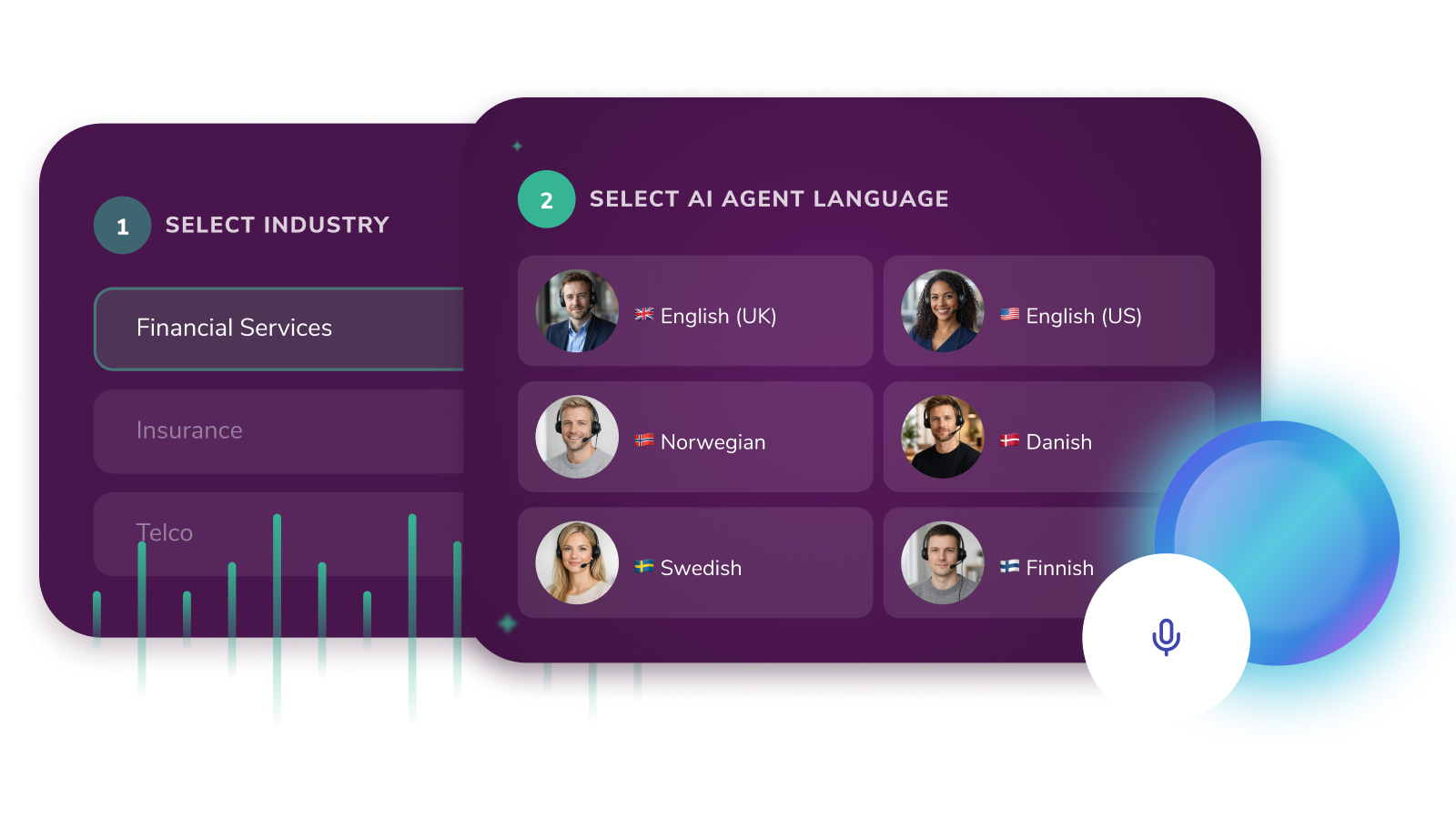
Voice AI finishes the request during the call
An IVR phone menu routes the call to a queue. A person still does the work.
A Voice AI agent does the work itself. It checks who is calling and opens the case. It makes the change and confirms it before the call ends.
The same AI agents run behind the call and the chat, with the same integrations. Voice extends what you already have, without a second project.
Learn more on the Voice AI page.
What your automation team will run
- The voice agent sits in front of your existing contact centre platform and IVR
- One solution serves both voice and chat
- Handover to a person is a warm transfer to a named queue, with the transcript and the identity attached
- Recording, transcripts and how long you keep them follow your call policy
- Reporting is per contact reason: completed, transferred to a person, abandoned
Voice brings premium service to every customer
Premium service for everyone
Speech recognition in English has been good enough to build on for years. Finnish, Swedish, Norwegian and Danish are now up to speed. Many customers would rather say what they need than type it or tap through a menu. Voice gives every one of them a premium service, at any hour.
Phone contacts cost the most
For most regulated organisations, the expensive requests still arrive by phone. The queue is longest there and the cost per contact is highest. Your customer feels that wait most sharply, because they spend it on the phone, waiting.
Prove it on one contact reason
You do not have to decide about voice as a channel. Pick one contact reason with real volume and a clear finish. Moving an invoice due date. Placing a service order. Adding a purchase. We run it on the phone, against your systems, with a fixed end date. Then we measure one thing: how many callers end the call with the request finished.
The AI agent reads the meaning
An AI agent on your site and in your channels reads meaning instead of matching keywords. Spelling mistakes, dialect and Finnish compound words do not break it.
It answers in your customer's language and recognises two requests in one message. When a person is needed, it transfers the chat with the identity, the transcript and the collected data.
Already have a chatbot? We start from what it has built up. We analyse your conversation logs, keep what works and improve the rest. Your customers have already told you what they ask for.
What this replaces in your current chatbot
- Meaning replaces keyword matching, so spelling, dialect and compound words no longer break the match
- "I have created a ticket for you" becomes "it is done, here is the confirmation"
- Dead-end answers that point at a form become an action in the source system
- One AI agent serves every language, so you stop running a separate bot per language
- Your existing live-chat tool stays. The AI agent sits in front of it and transfers the chat into it
Learn more on the AI agents page.


Authentication first, then personalised service
The AI agent first checks who it is serving, with bank ID or, for employees, Azure Active Directory. It then knows past conversations and service subscriptions, so the service is personal. It can also offer what fits this customer while they are still in the conversation.
Then it makes the change. It calls your system's API where one exists. Where none exists, our intelligent automation uses the system the way your people do, with the same rights. Document processing reads the forms and attachments that arrive unstructured. AI agents take the steps that need judgment. The agent confirms the change in the conversation.
This is the half most vendors leave to you. Digital Workforce has run it as a service for a decade, for more than 200 large customers and more than 5,000 automated processes.
What your automation team will run
- Authentication through Bank ID or Azure Active Directory, with single sign-on
- Connection to your back office by API where one exists, and by intelligent automation where there is none
- The same AI agents across channels: voice, chat, social, SMS, and collaboration tools such as Teams
- The person who takes the request gets the identity, the transcript and the collected data in your existing agent desktop
- We run the integrations, the automations and the service management under one service agreement
The customer advisor stops searching and starts serving
A machine should not finish every request. Hard decisions, upset customers and anything where a small error is costly go to a person.
When they do, the service stays in the conversation. The automation follows the dialogue between the customer and the advisor. It drafts the reply and shows the next step.
The customer is still in the conversation. Your customer advisor decides what to send.
What compliance and your AI committee will ask
- The service reads the live conversation and the systems your advisor can already see
- The service suggests and your customer advisor sends, so nothing reaches the customer without review
- Generative AI answers where your policy allows it. Where it does not, the service gives fixed answers you have approved
- Guardrails keep the service on your topics
- We log what the service suggested, what your customer advisor accepted and what they changed

For your customers


An answer at any hour, including nights and weekends

Service in their own language, Finnish and Swedish

No repeating themselves and no second contact to check

Requests finished at once, not queued as a ticket

A chat window that meets accessibility rules by design
Every build starts from top contact reasons
Spot
We analyse your contact reasons and your existing conversation logs. Then we tell you what we found. Some requests can finish without a person. Some need a person, with the service assisting.
Make a case
We show what the service is worth to you. That covers the cost of work that no longer needs a person, and the revenue from offers made while the customer is still in the conversation.
Build
We reuse the content and conversation history your current chatbot has built up. We build the integrations. After the first go-live, we add more channels.
Run
We operate the service. Every month we review the requests that did not finish. Then we automate the next ones. We call this continuous services.
Three gates decide a regulated tender
Public tenders in regulated Nordic organisations depend on three things: accessibility, language coverage, and the audit trail. We settle all three.
Accessibility
Public digital services across the EU have to be accessible, and procurement rules include the requirement. Most tenders ask for WCAG 2.1 at AA. The chat panel is independently audited at AAA, the level above. So the accessibility annex will not stall your tender. Conformance depends on how the panel is configured, and keeping it there is our job. Learn more on boost.ai partner page.
Language cover
Finnish and Swedish are both hard, in different ways. Finnish conjugates and declines, and builds compound words no keyword list will contain. Swedish speakers write in dialect, and a Finland-Swedish customer does not write like a customer in Stockholm. Nordic languages are covered, along with English and many others.
A full audit trail
The record has two halves, and most conversational tools give you one. The first is the conversation. It holds what your customer asked and what the service said. The second is the action. It holds what the automation did: which system, when, and which service account. With both, you can answer what a regulator asks. What did we tell this customer? What did we do for them? And on whose authority?
Procurement gets the file it always asks for
What procurement needs to see
- WCAG 2.2 AAA conformance statement for the chat window
- ISO/IEC 27001 for information security and ISO/IEC 20000-1 for service management
- GDPR compliance
- Alignment with the EU AI Act
- A named service manager and an SLA
What compliance and your AI committee will ask
- Access to logs is role-based, and the roles are yours to define
- Every change is versioned and passes built-in automated tests before release, and the test results are kept for audit
- Generative AI answers inside guardrails you set for each topic
- Fixed, approved answers wherever your policy does not permit generative AI
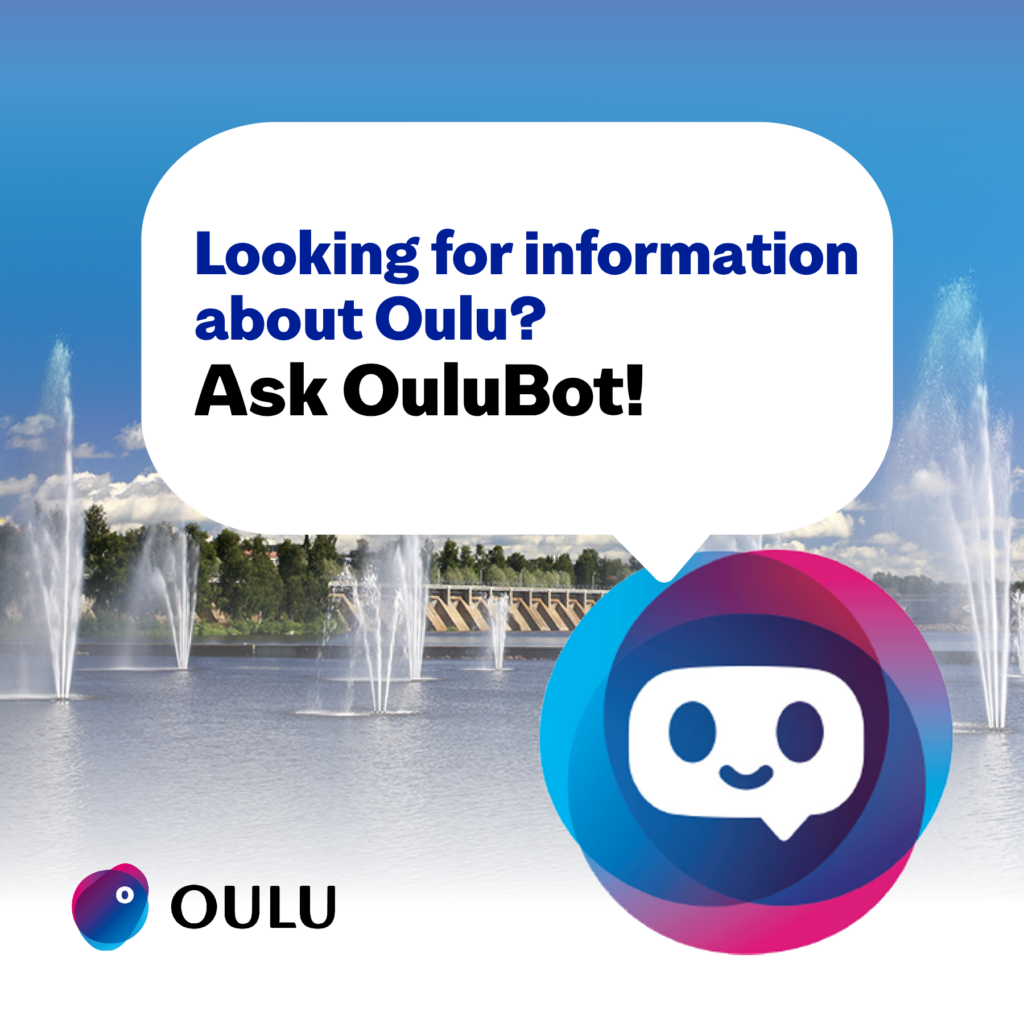
City of Oulu serving residents with Agentic AI
OuluBot is the City of Oulu's AI agent. It serves residents around the clock, across hundreds of topics. They range from public transport and travel cards to library services and building control.
The procurement route matters as much as the technology. Oulu bought it as an Innovation Partnership, a Business Finland route. The buyer did not specify a finished product up front, and the solution was built jointly during the project.
Sometimes it is hard to write a specification for something people have not seen. For them, innovation partnership route is often the only way the project happens.
- Over 90% of incoming service contacts served by AI agents
- 80% of all questions successfully resolved
- Over 50,000 contacts a year
- serving residents around the clock since 2020
AI agents and voice AI agents run on boost.ai
Digital Workforce partners with boost.ai. It is a conversational AI platform built for customer service in regulated industries. boost.ai carries the conversation, inside guardrails built for regulated work. Digital Workforce runs everything behind it.
You buy one service, with one point of accountability. We configure the platform to match your requirements, your data residency rules and the contact centre you already run.
Learn more about the certifications and the security architecture on the boost.ai partner page.
You buy the completed request, not the technology
Point solutions cover one half of the chain. A chat tool answers the question. An integrator hands you a platform, a licence and a training course. Either way, the risk stays with you. You hire people to build and tune the AI agents. You staff the integrations. You find out in eighteen months whether it worked.
Digital Workforce with boost.ai sells the completed request. We design the service, build it and run it. Whatever does not finish is ours to improve.
One agreement
One agreement, one SLA, one service manager. That covers the conversation, the integration and the back-office work. A new contact reason is a change inside the service.
One service
You buy a service that includes technology, integrations, service management, and service delivery. That is what service as software means.
One point of accountability
In most organisations, the conversation, the integration and the back-office process have three owners. Often three separate agreements. When a request fails halfway, each one can show that their part worked. The whole chain is ours.
Every month, more requests finish without a person
Go-live is where the work starts. Every month we look at the requests the service did not finish. We group them by reason.
The share of automation completed end to end goes up over time. We report that share back to you.
We call this continuous services. Digital Workforce uses the same model to run thousands of critical business processes for its customers.
What you get every month
- A review of automation, grouped by contact reason, and what we recommend focusing on next
- New automations released without a service break
- Thorough testing before every release
- A named AI specialist and a named automation lead on our side, if you want them
- Access to the analytics for your own team, and training if you want to take parts of it in-house
For your organisation
Fewer repeat contacts, because the first one finished
Advisors spend their time on judgment, not on searching
Capacity that scales with volume, not with headcount
A full audit trail of what was said and what was done
One owner for the conversation and the work behind it
Buyers ask us these first, so we answer them here
Bring ten contact reasons and we will group them
Your customers do not experience your automation strategy. They experience how long it takes to get something done. They count how many times they have to ask. They notice whether the answer was right.
Bring your business and customer service together. In sixty minutes we show what the industry is doing now and where it is going, and tell you where the risks sit. The session works best with your business leader, your customer service director and whoever leads AI governance.