
Finish customer requests in the conversation
Today's chatbots are good at capturing customer requests. Digital Workforce with boost.ai adds AI agents that answer in the customer's own language, at any hour, and finish the request there and then.

The chatbot automates the conversation, not the work
Most teams offer a chat that finds an answer in your knowledge base or website, or takes the request as a ticket. An advisor then reads that ticket, opens three systems, makes the change and replies. That takes a day, sometimes three.
The conversation was automated. The work was not. A request that starts as a ticket comes back twice. The customer phones to check, and someone still has to make the change by hand. Once in chat, once on the phone, once at a desk.
Three things keep it that way. Your customer writes in a hurry, in words a chatbot cannot turn into action. The answer sits in core banking, a permit register or another system nobody has connected, and that work belongs to another team and another budget. And many chatbot projects stalled on quality or governance before they got that far.
Customers count only finished requests
Your customer never sees a resolution ratio. They measure whether the job got done, and how long that took. Count the requests that finish end to end, from first message to the change landing in your system of record.
Digital Workforce with boost.ai runs the conversation and the work behind it as one service. You buy the completed request, and whatever does not finish is ours to fix. That is service as software. Read more on the Customer Service Automation page.
Only one of five request groups needs a person
The same five groups appear in many service desks we analyse. Advise, Redirect, Reuse, Restructure and Open-ended name what the customer wants. The percentages are the pattern we see most often. Your own split will differ.
Advise
Around 50 to 100 recurring questions about your organisation, products and rules. Typically a quarter of volume. The AI agent answers these on its own. It needs no integration.
Redirect
The customer needs something you already publish. A form, a price list, a document. The AI agent opens the exact page. Typically 15% of volume.
Reuse
The customer wants something done. The AI agent authenticates the customer and reuses your existing services to finish the request. This represents typically 20% of volume, and covers a big portion of total costs.
Restructure
The request needs a person who is prepared. The AI agent collects and checks everything the advisor needs. Typically 40% of volume, and the fastest saving.
Open-ended
Open-ended questions follow no script, or there is no clear answer, so a generative model handles them. The topic stays fixed and so do the rules. We use this where your policy allows.
The AI agent understands the customer need
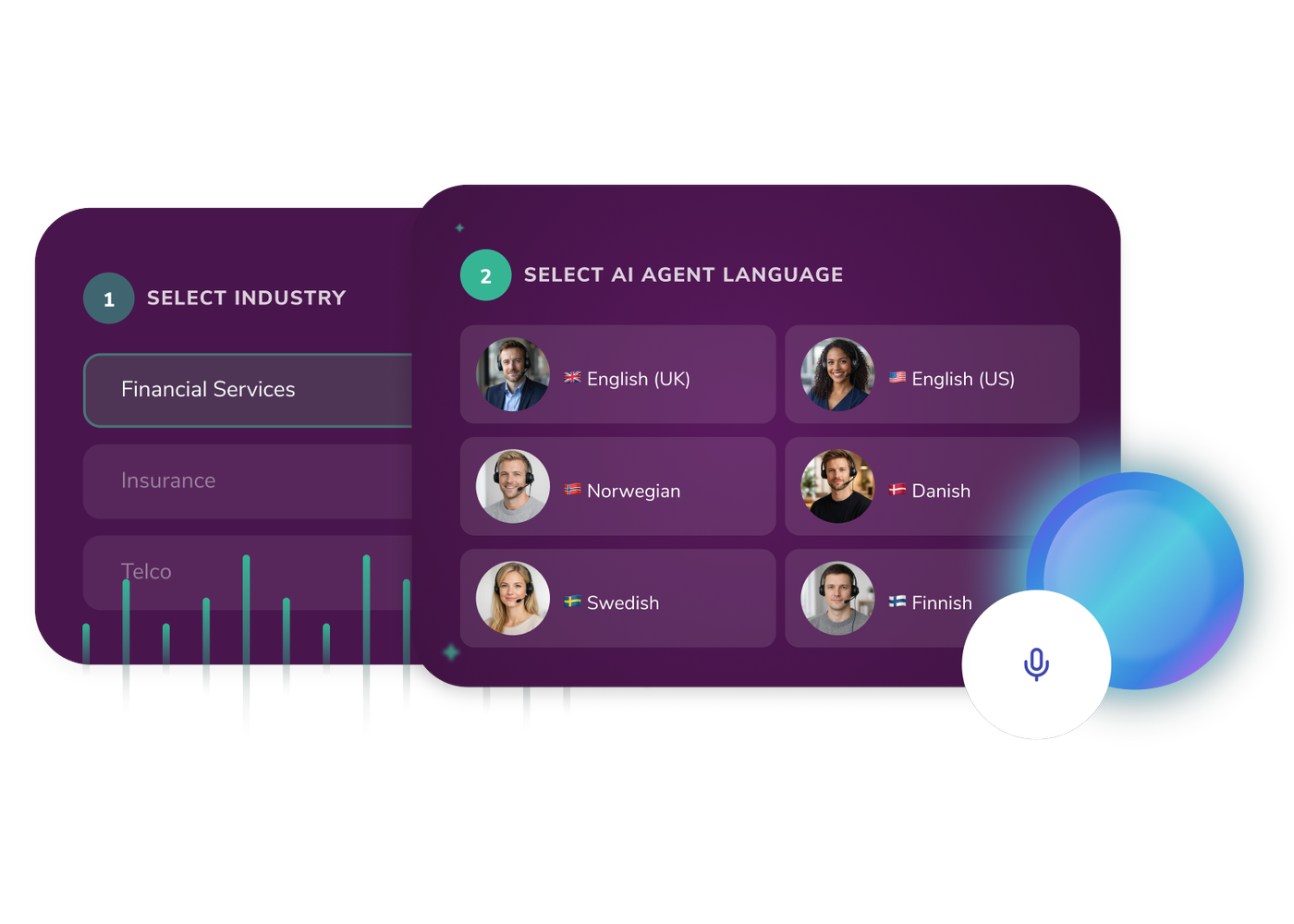
The AI agent reads the meaning of a sentence rather than a list of keywords. Spelling mistakes, informal writing, dialect and Finnish compound words still reach the right meaning. The AI agent also adapts to your customer’s language and replies in that language.
If someone puts two requests in one message, the AI agent finds both. If confidence is low, the AI agent asks a question. If the answer is still unclear, the AI agent says so and passes the customer to your advisors.
The same AI agent also answers the phone. Learn more on the Voice AI page.
The AI agent works in your systems in real time
The AI agent authenticates the customer with strong authentication, such as bank ID, or another method you choose. From then on it knows who it is serving, so it can personalise the answer and offer what fits that customer.
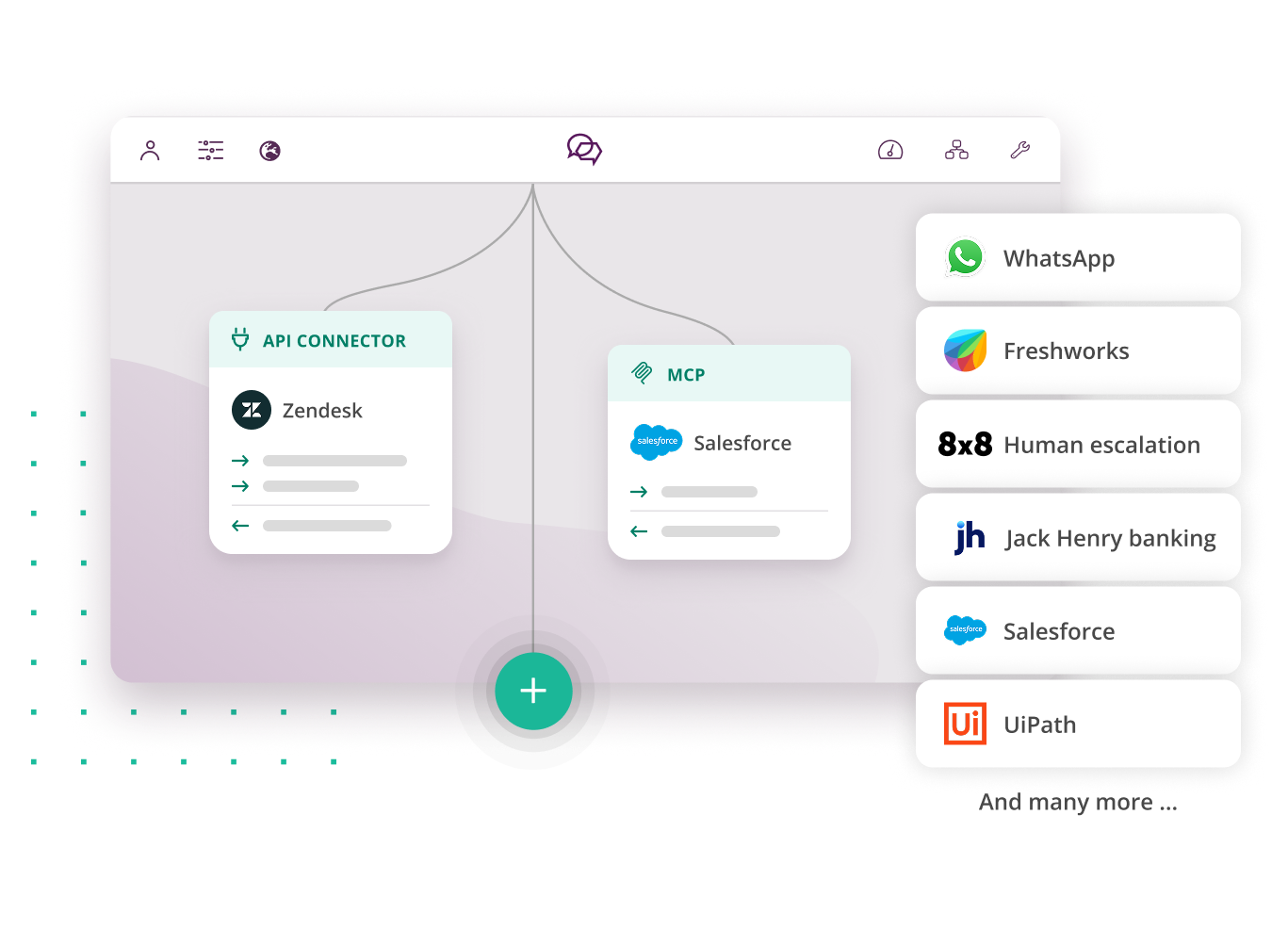
The AI agent accesses your back-office systems while the chat is open. The customer asks, the record changes, the confirmation comes back. Dozens of connectors already exist for the systems that service desks run.
Where a system has no API, our intelligent automation uses that system the way your people do.
Some requests cannot finish in real time. Those create a service request or a callback, with everything already gathered.
Digital Workforce has operated critical business processes since 2015. That work covers more than 200 large customers and 5,000 automated processes.
Identity and integration have five parts
- Identity checked through bank ID or Azure Active Directory, with single sign-on
- Connection to your back end by ready-built connector, by API, or by intelligent automation where a system has neither
- Every action written under a named service account, with the same rights a person has
- The same AI agents across channels, so what you build for chat also works on the phone
- Digital Workforce staffs all three: the integrations, the automations and the continuous improvement of the service
You set the limits for Generative AI
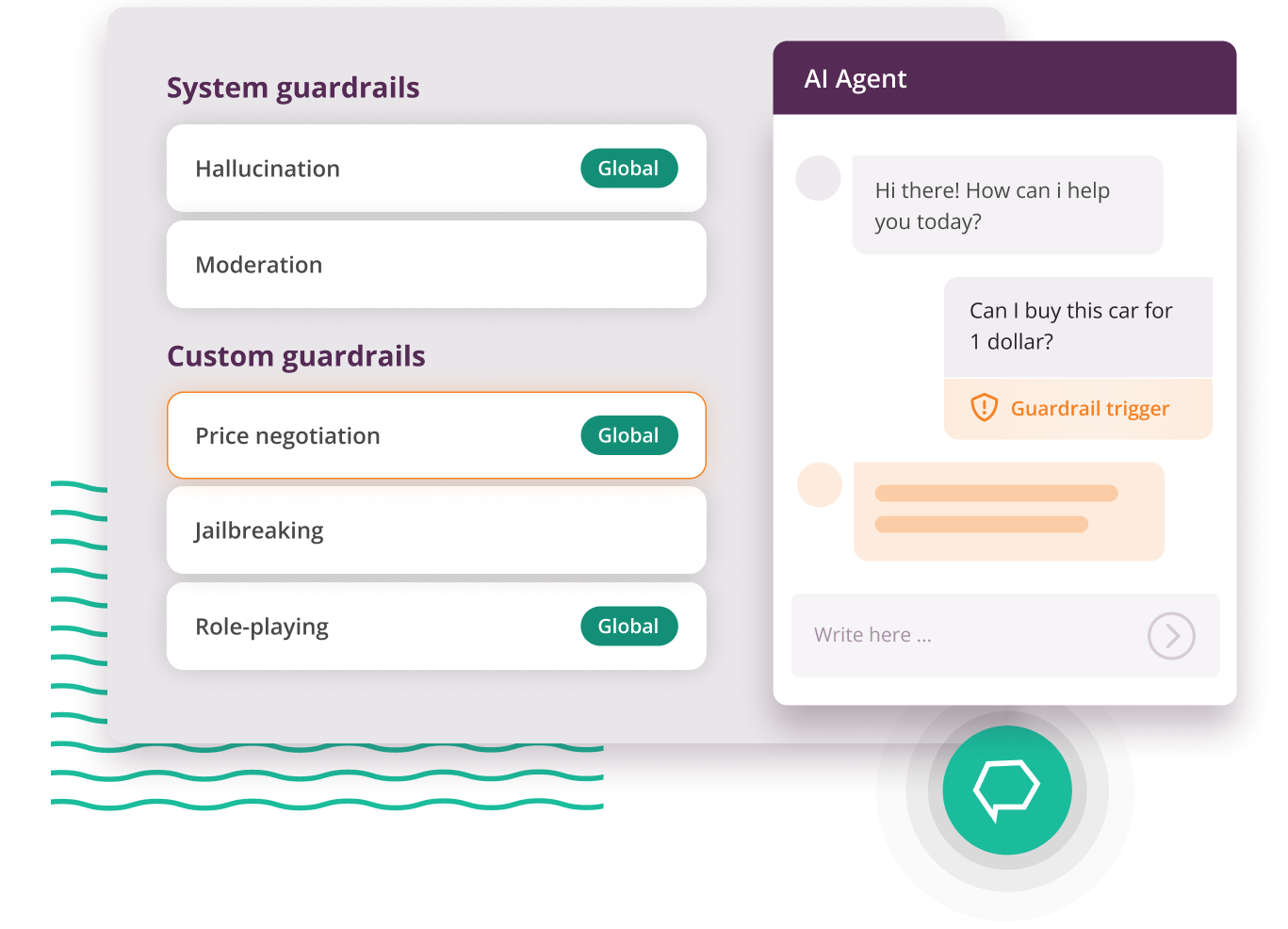
Generative AI can handle most of the conversation: new phrasing, follow-up questions and requests nobody scripted. Fixed answers you have approved handle what must be said exactly.
The model answers from your approved sources, on your subjects.
Where your policy limits generative AI, the service gives fixed answers you have approved.
The AI agent runs on the boost.ai platform. Learn more about its certifications and security architecture on the boost.ai partner page.
A compliance review checks six controls
- The model answers from approved content, and we list the sources for each deployment
- Subjects outside your scope are blocked by a platform setting, not by prompt wording
- We document every generative deployment: scope, sources, guardrails and fallback
- You choose, topic by topic, between a fixed answer you have approved and a generative one
- Where a generative answer is not confident, the service passes the customer to a person
- Every change passes built-in tests before release, and the results are kept for audit
Handover gives the advisor the whole case
A machine should not finish every request. Hard decisions, upset customers and anything where a small error is costly all go to a person.
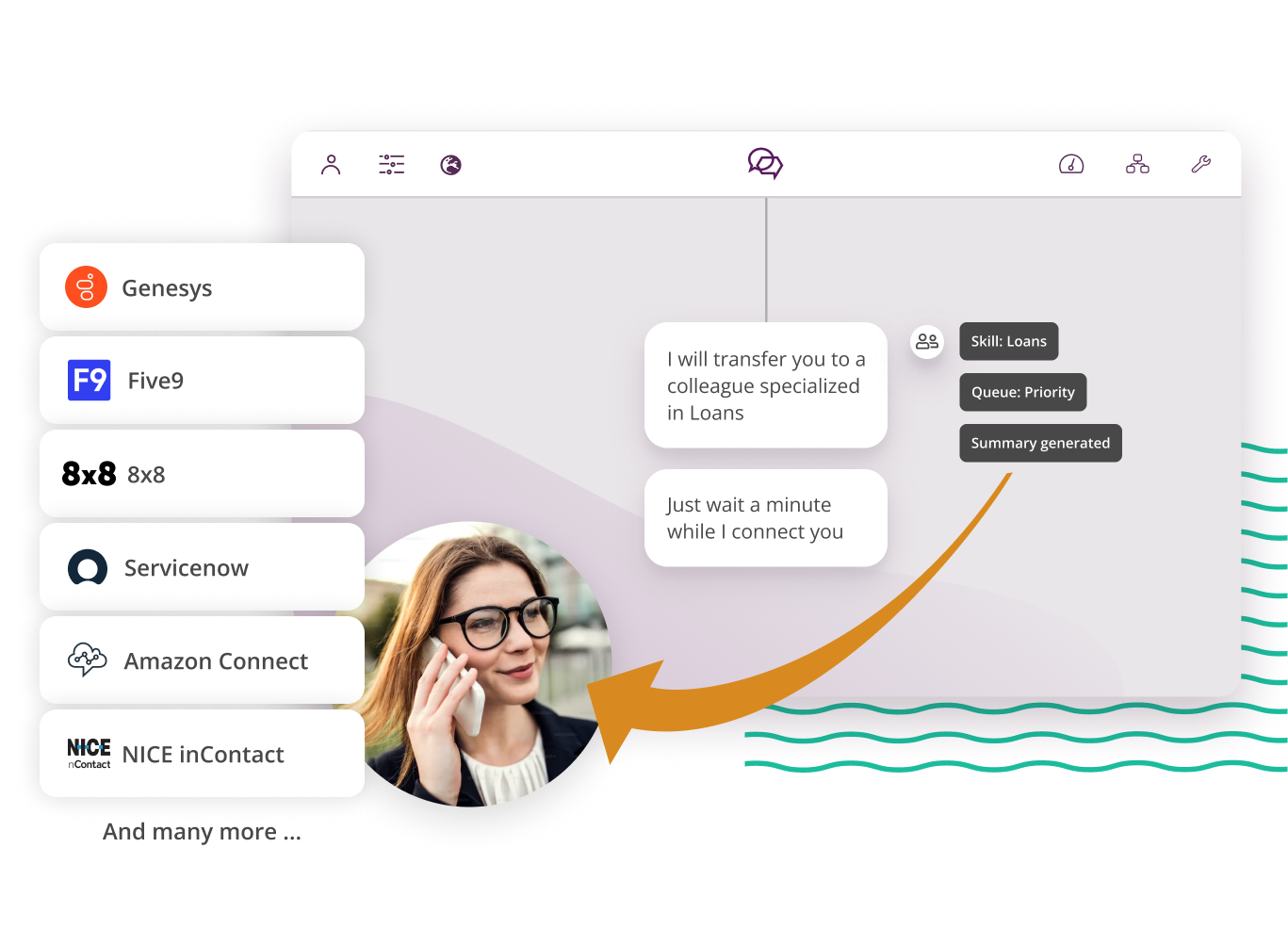
Handover happens inside the live-chat tool you already run, so your advisor desktop stays. Your advisor gets the verified identity, the transcript and everything the AI agent collected. The customer does not start again.
The advisor keeps the judgment. Nobody has to search other systems for case details.
Your existing chatbot gives the new service a head start
A team that already runs a chatbot is not starting from zero. Its content and years of chat history are the best input you can have.
Your customers have already said what they ask for, thousands of times. That evidence is better than a workshop. The existing chatbot keeps running until the replacement works measurably better.
What usually changes for the customer
- The AI agent reads meaning instead of matching keywords
- Dead-end answers that point to a form become an action in the source system
- One AI agent serves every language, so you no longer need one chatbot per language
Start where the business case is strong
The case is strongest when your requests are costly to handle by hand, and there is a chat history to build on.
Where the case is strongest
- Costly requests that need an authentication and changes in a core system, not just an answer
- An existing chatbot with content and chat history to build on
- Systems can be reached through a ready-built connector, an API, or a digital worker that drives the interface a person uses
Where the case is harder to prove
- Limited chat history to build on, so the content comes from workshops
- Systems with no API and no interface that intelligent automation can use
The first session starts with your priorities
The session starts with your priorities. It works best when we hear from your business director, who owns the P&L, and your customer service director, who owns the problem. If an AI committee signs off new AI services, bring its lead too.
You leave with a picture of the market: how others in your industry have started, and where your own benefits lie.
Learn more about Customer Service Automation.